
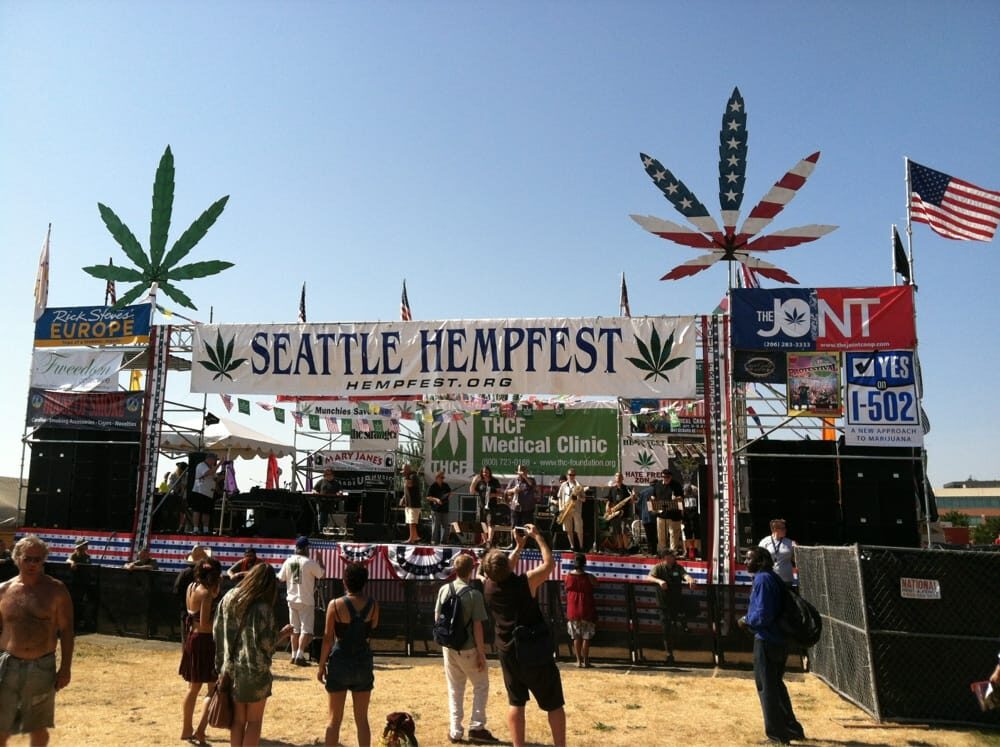
From Humble Beginnings to Global Stage
Seattle Hempfest began in 1991 as the Washington Hemp Expo, a modest gathering of about 500 cannabis supporters in Volunteer Park. The event was renamed Hempfest the following year, embracing its identity as a “protestival”—part protest, part festival. By 1995, Hempfest had moved to Myrtle Edwards Park on Seattle’s waterfront, where it grew into a massive three‑day event featuring music, speakers, vendors, and activism.
Attendance skyrocketed over the years. By the late 2000s, Hempfest regularly drew crowds of 100,000 people, with a peak of over 310,000 in 2008. It became the largest cannabis reform rally in the world, blending counterculture celebration with serious political advocacy.
Voices of Reform
Hempfest wasn’t just about music and smoke clouds—it was a platform for reform. Over the years, the festival hosted a wide range of speakers:
- Woody Harrelson (2004) used the stage to call for cannabis legalization, bringing Hollywood visibility to the cause.
- Rick Steves (2007), the travel writer and PBS host, spoke passionately about cannabis reform, lending mainstream credibility.
- Politicians like Seattle City Council member Nick Licata and Green Party candidate Jill Stein (2012) addressed crowds, showing Hempfest’s influence reached into electoral politics.
- Even former Seattle Police Chief Norm Stamper (2006) joined the call for change, highlighting how law enforcement voices were shifting.
This blend of celebrity, activism, and grassroots energy made Hempfest not just a festival, but a major free speech event. It was a rallying cry for cannabis legalization long before mainstream acceptance.
The Pause After 2020
For nearly three decades, Hempfest ran annually without interruption. But in 2020, organizers faced a critical setback. The city revoked vendor access to the park’s service road, making it nearly impossible to manage logistics for such a large event. Combined with pandemic restrictions, Hempfest was forced to cancel.
Since then, organizers have struggled with funding, permitting, and city cooperation. Hempfest has not returned in full force, despite hopes for revival. As of 2025, no official dates have been confirmed, leaving Hempfest in limbo.
Legacy and Cultural Impact
Even without recent festivals, Hempfest’s legacy is undeniable:
- Legalization Milestones: Hempfest provided a stage for reform advocates during pivotal years leading to Washington’s medical legalization in 1998 and adult‑use legalization in 2012.
- Normalizing Cannabis Culture: By hosting peaceful gatherings of hundreds of thousands, Hempfest helped shift public perception of cannabis users from fringe rebels to mainstream citizens.
- Community Building: Hempfest was a place where activists, artists, and everyday people could connect, creating a sense of shared identity and solidarity.
- Global Inspiration: Hempfest’s success inspired similar events worldwide, proving that cannabis culture could be celebrated openly and politically at the same time.
Hempfest in Context
Hempfest’s rise and pause reflect the broader arc of cannabis culture:
- In the 1990s, Hempfest was radical, pushing against prohibition when legalization seemed impossible.
- In the 2000s, it became a cultural landmark, drawing mainstream figures and massive crowds.
- In the 2010s, Hempfest celebrated victories as legalization spread, but also warned against complacency.
- In the 2020s, its absence highlights the challenges grassroots movements face in sustaining momentum once their core goals—like legalization—begin to be achieved.
Top 5 Hempfest Moments
- 1991 – The Beginning A few hundred activists gathered in Volunteer Park for the first “Washington Hemp Expo,” planting the seeds of Hempfest.
- 2004 – Woody Harrelson Speaks The Hollywood actor took the stage to call for cannabis legalization, drawing national attention.
- 2006 – Norm Stamper Joins the Cause Seattle’s former police chief spoke out against prohibition, a powerful moment of law enforcement dissent.
- 2007 – Rick Steves Advocates Reform The travel writer and PBS host lent mainstream credibility, urging sensible cannabis laws.
- 2012 – Legalization Victory Hempfest celebrated Washington’s passage of Initiative 502, making adult-use cannabis legal — a milestone the festival had long fought for.
The Future of Hempfest
Organizers have signaled hopes for a return, but Hempfest’s future depends on overcoming logistical hurdles and securing city support. Some activists argue Hempfest’s mission is less urgent now that cannabis is legal in Washington. Others counter that Hempfest remains vital as a platform for addressing social justice issues, such as expunging records, equity in the cannabis industry, and federal legalization.
Whether Hempfest returns or not, its cultural impact is secure. It showed the world that cannabis activism could be joyful, massive, and effective. It proved that grassroots movements can reshape laws and culture.
Seattle Hempfest is more than a festival—it’s a symbol of cannabis culture’s journey from the margins to the mainstream. Its pause after 2020 is a reminder that even the most powerful grassroots movements face challenges in sustaining themselves. Yet Hempfest’s legacy endures: in the laws it helped change, the perceptions it reshaped, and the communities it built.
At 420.school, Hempfest’s story is not just history—it’s a lesson in how culture, activism, and celebration intertwine, and how grassroots traditions can spark worldwide movements.
Sources:
